Home
 Sewing, Embroidery & Serger
 Cutting machines
 Dress Forms
 Brands
 Review


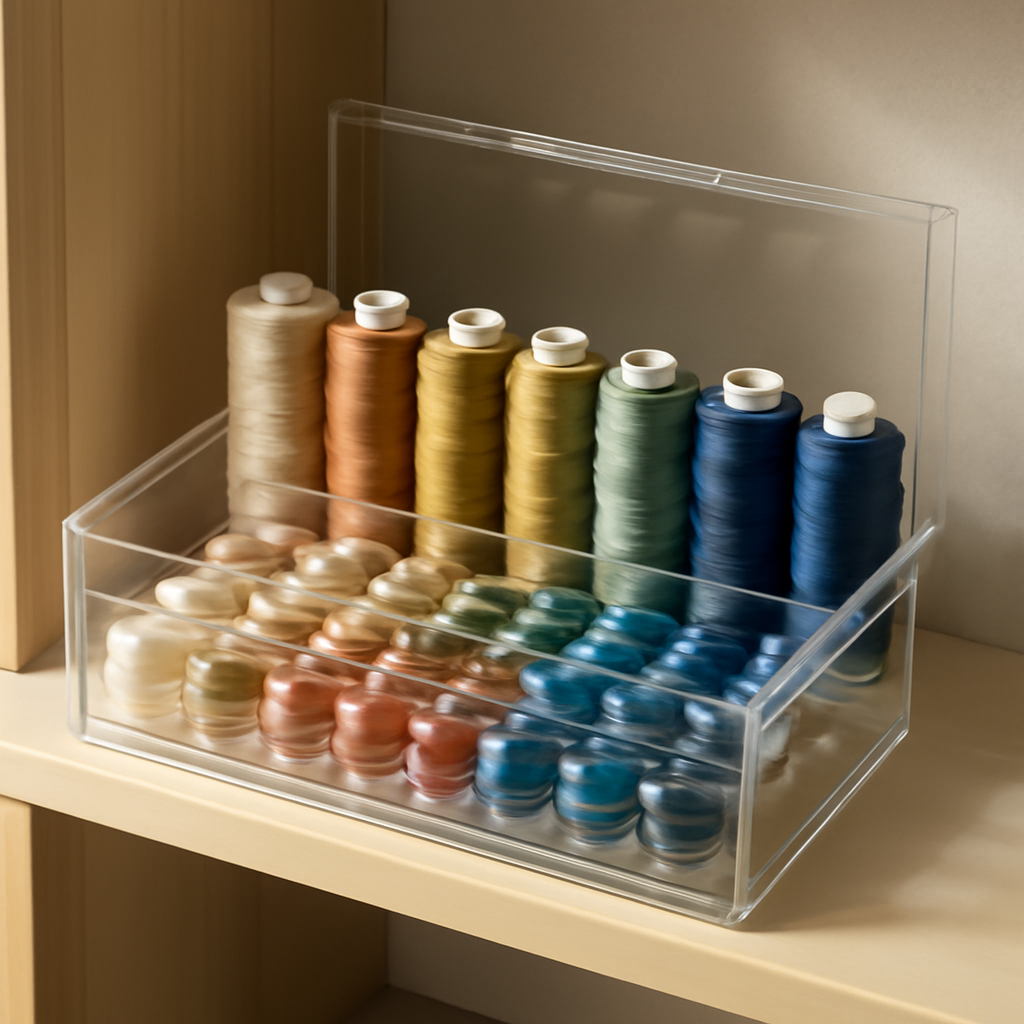
Your embroidery only looks as good as the thread feeding your machine. Good storage keeps colors vivid, fibers strong, and bobbins ready without tangles or lint. Whether you use cotton, polyester, rayon, silk, or specialty metallics, a little planning protects your investment and speeds up your workflow. Here’s how to guard against the biggest threat, choose containers that actually work, build an organization system you can maintain, and decide the best (and worst) places in your home to keep thread and bobbins.
Why humidity is the real enemy
Moisture quietly weakens thread long before you see visible damage. Natural fibers like cotton absorb water, swell, and become more prone to fuzzing, fraying, and breakage. Dyes can migrate, metallics can tarnish, and cardboard spool cores may warp. On the hardware side, steel bobbins can corrode, and any condensation invites mold and musty odors that are hard to remove.
Light and heat matter too, but humidity does the most cumulative harm. That’s why manufacturers emphasize cool, dry, dark storage. As noted in AMANN thread storage guidance, thread is best kept in a cool, dry, and dark place, ideally in its original packaging, which shields it from dust and moisture swings.
- Stabilize the environment: Use closed containers; add silica gel or other desiccants and replace them periodically.
- Avoid condensation: If thread has been in a cold car or porch, let it come to room temperature before opening the container.
- Control exposure: Keep thread out of direct sunlight and away from heat sources like radiators, irons, or sunny windowsills.
- Cleanliness counts: Dust holds moisture. Wipe storage surfaces and lids regularly.
Choosing the right storage container
Pick containers that block dust, buffer humidity, and prevent UV exposure. Clear, latching polypropylene boxes are practical for visibility; just keep them in a cabinet or drawer to limit light. For long-term storage or heirloom thread, acid-free, lignin-free materials help minimize chemical interaction with fibers. Opaque bins or dark-tinted boxes provide extra protection from light.
- Spool storage: Upright racks with pegs are convenient, but use a cover or keep them inside a cabinet. Drawer trays with adjustable dividers keep spools from rolling and reduce tangling.
- Bobbin control: Dedicated bobbin cases, silicone bobbin rings, or foam-lined trays prevent unwinding. Use small clips or bands to secure tails.
- Travel or classes: Zippered thread organizers with elastic loops prevent abrasion and leakage between spools.
- Labeling: Containers with writable lids or removable inserts make re-sorting painless after projects.
If your sewing space doubles as storage, consider furniture with closed compartments. A well-designed workstation helps you keep dust and humidity in check while keeping tools within reach—see top sewing tables and storage cabinets for ideas that integrate thread drawers, doors, and work surfaces.
Organizing by type, weight and color
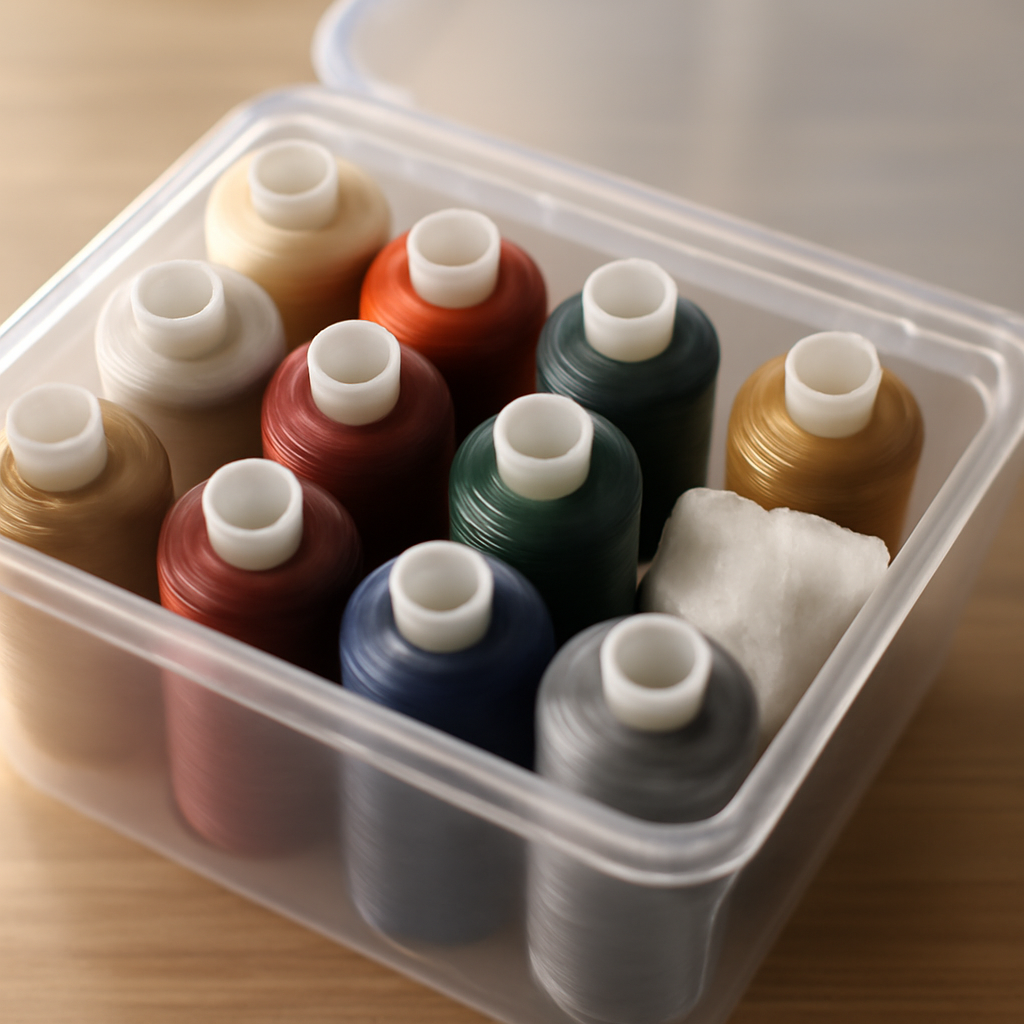
Organize for how you sew. Start with the fiber and purpose, then sort by weight, and finish with color. That flow mirrors how you choose thread for a project and makes retrieval automatic.
- By type: Separate cotton, polyester, rayon, silk, and metallics. Keep specialty threads (e.g., variegated, trilobal poly, monofilament) in their own compartments to avoid mix-ups.
- By weight: Group common embroidery and quilting weights together, and keep heavy topstitching threads apart from delicate detail threads. Store cones separately from standard spools to prevent tipping.
- By color: Arrange spools by hue (red through violet), then by value (light to dark). Park neutrals (white, black, grays, beiges) in a dedicated row for quick access.
- Spool + bobbin pairing: Keep a pre-wound bobbin with its matching spool using a bobbin clip or a short silicone band. It saves time and ensures color consistency on top and bottom.
- Label and log: Mark brand and color codes on dividers. A simple bin index or a spreadsheet prevents accidental duplicate buys and helps you track favorites.
Whatever scheme you choose, stay consistent. Reserve one “in-progress” tray for current projects so your main system stays tidy.
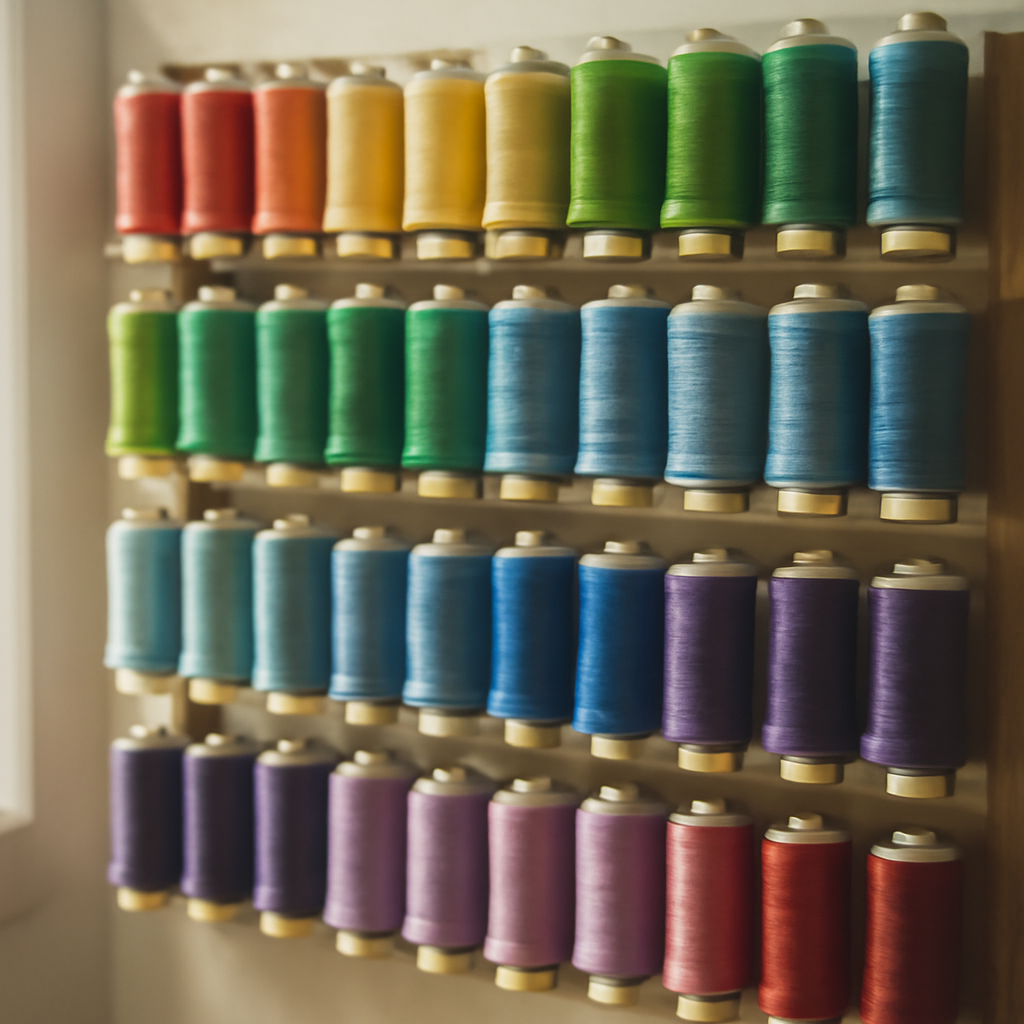
Where in your home to keep them (and where to avoid)
Store thread in stable, climate-controlled spots with minimal light exposure. A closed cabinet or drawer in an interior room is ideal. If you like wall racks, give them a curtain or cabinet door to block light and dust.
- Good locations: An interior closet, a sewing-room cabinet, a dresser drawer, or a shelving unit with opaque bins. Keep containers a few inches off floors to avoid dust and minor spills.
- Use with care: Open shelving works only if you add dust covers and keep it away from windows and vents.
- Avoid: Attics, basements, garages, laundry rooms, bathrooms, kitchens, and window ledges. These spaces swing in humidity and temperature, invite condensation, and collect airborne moisture or grease.
- Away from heat and ozone: Don’t store near radiators, irons, sunny panes, or motors that blow warm air. Heat accelerates fiber aging, and airflow carries dust.
- Moisture mitigation: If you must use a borderline space, upgrade to sealed bins with desiccants and check them periodically.
Remember: your storage location matters as much as the container. Choose a calm, dark, dry spot, and your thread will behave better at the machine.
Protecting thread and bobbins is about controlling moisture, limiting light, and creating a system that’s easy to maintain. Use closed containers, pair spools with their bobbins, label clearly, and keep everything in a cool, dry, dark place. A few silica packs and a reliable routine go a long way. With your supplies protected and organized, you’ll spend less time untangling and more time stitching clean, consistent embroidery.