Home
Home Sewing, Embroidery & Serger
 Cutting machines
 Dress Forms
 Brands
 Review

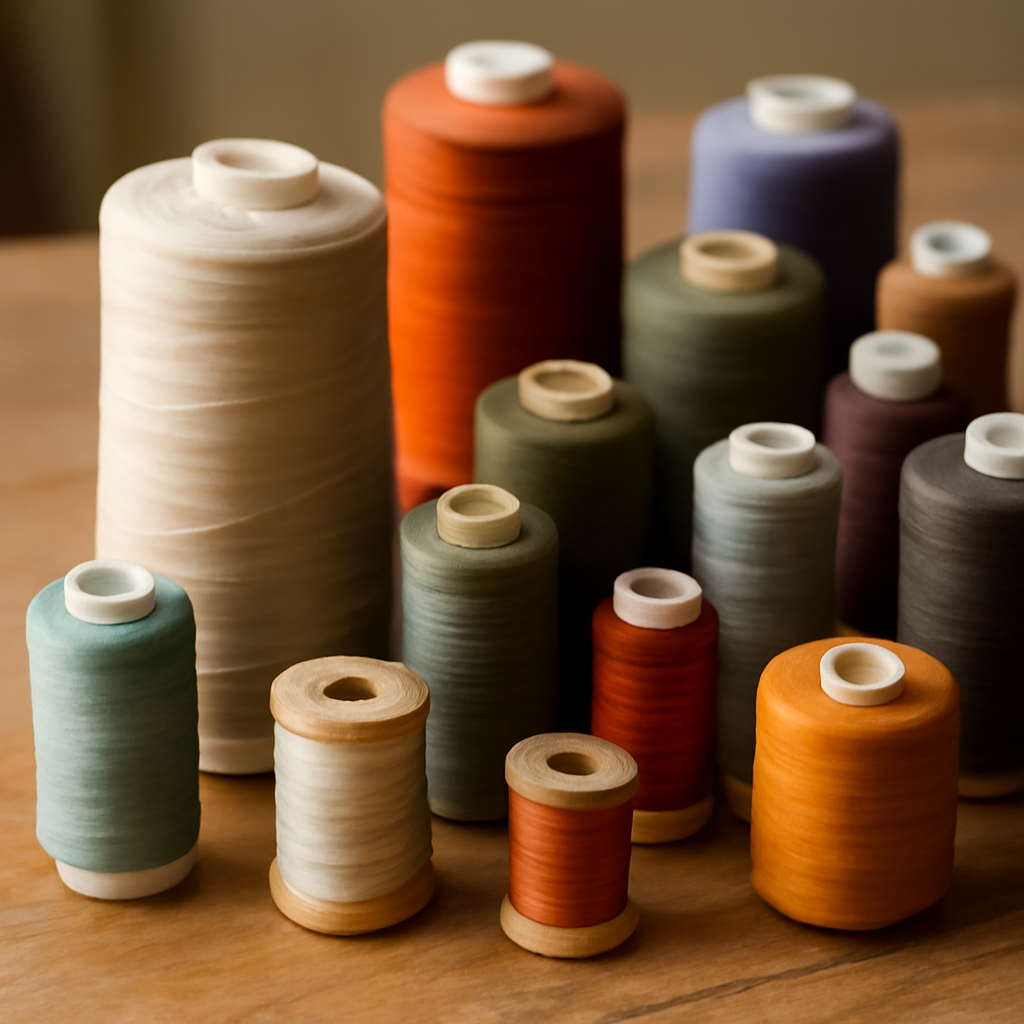
Getting thread choice right is the shortcut to smoother stitching, prettier topstitching, and seams that survive real wear. The best thread for your fabric depends on weight, fiber, and the job each seam must do. Once you understand how thread weight is labeled and how construction affects strength and flexibility, you can match materials with confidence. Use the guidelines below as a starting point, then test on a scrap before committing to the final garment.
How thread weight actually works
Thread size numbers aren’t universal, so it helps to translate them into what they really mean. In general, bigger number = thicker thread only in some systems. The most reliable modern standard is Tex, which directly reflects thickness by weight.
- Tex (T): grams per 1000 meters. Higher Tex = thicker, stronger, bulkier thread.
- Denier (D): grams per 9000 meters. Higher denier = thicker. Common in nylon/poly embroidery and lingerie threads.
- Ticket (Tkt)/Commercial: inverted scales where a larger number is finer (e.g., Tkt 120 is finer than Tkt 40).
Construction also shapes performance:
- Spun polyester: staple fibers twisted; versatile and forgiving for everyday seams.
- Core-spun (poly core, cotton or poly wrap): excellent strength with a soft, natural look on wovens.
- Continuous filament polyester/nylon: very strong, smooth, abrasion-resistant; great for activewear and heavy seams.
- Mercerized cotton: matte, heat tolerant, lovely on natural-fiber wovens; less stretchy than polyester.
- Silk: fine, supple, ideal for delicate fabrics and hand finishing.
- Rayon (for embroidery): lustrous color but lower seam strength; reserve for decorative stitching.
Two more need-to-knows: ply (2- or 3-ply) boosts strength, and finish (soft vs. lubricated) affects how smoothly the thread runs. For most garment sewing, a quality soft-finished, all-purpose polyester in the right Tex is a reliable baseline.
Matching thread to lightweight fabrics
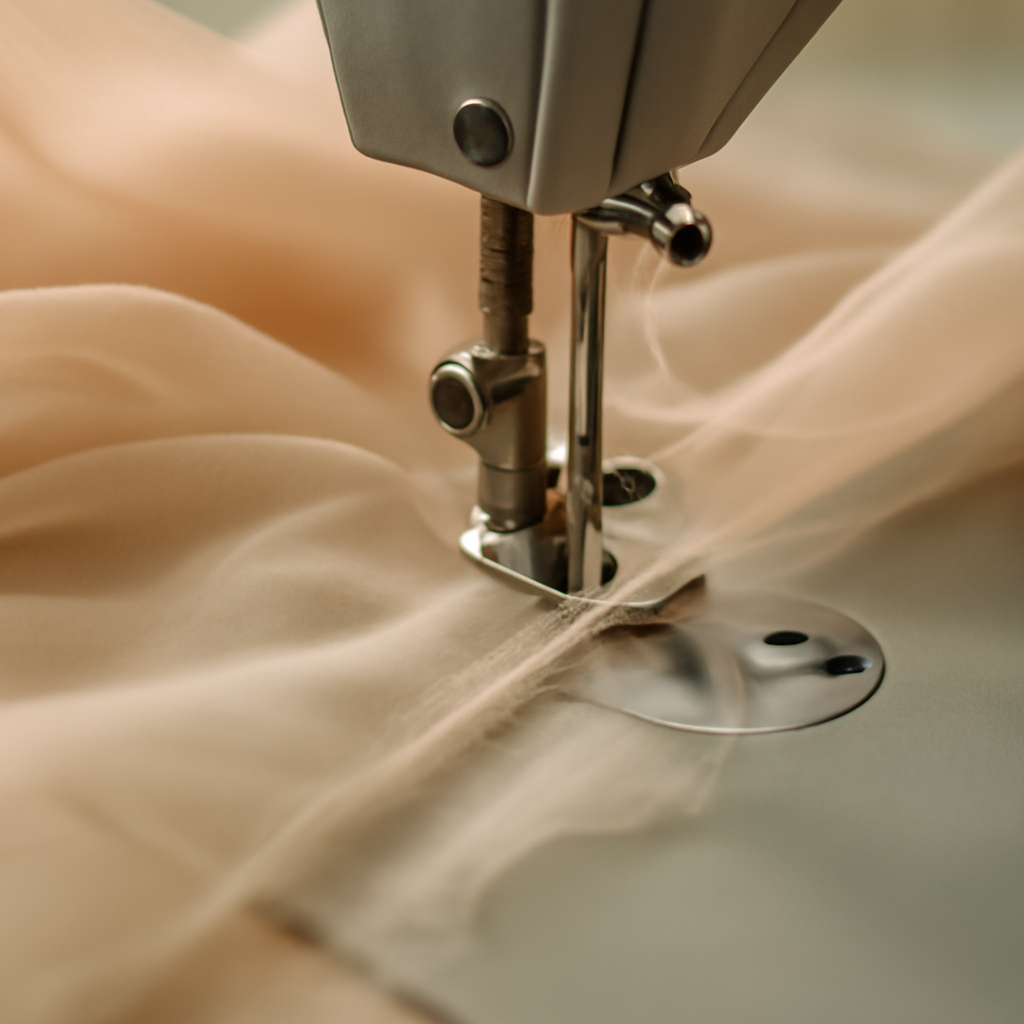
Lightweight wovens and knits (voile, lawn, batiste, chiffon, silk charmeuse, tissue jersey) need fine, low-bulk thread that won’t pucker or overwhelm the fabric.
- Best sizes: Tex 10–20 (very fine) or a fine Tkt 80–120 thread. If you only have an all‑purpose cone around Tex 25–30, lengthen the stitch slightly and reduce tension to keep puckers at bay.
- Fiber and build: Microfilament or fine spun polyester for strength with minimal diameter; silk for couture finishing; mercerized cotton 60 wt for heirloom details on stable, non-stretch wovens.
- Knits and activewear: Use smooth polyester in the needle. For sergers, feed textured nylon (woolly/soft) in the loopers to add stretch and recovery.
- Stitch settings: Shorten stitch to about 2–2.4 mm for sheer fabrics; support seams with tissue or wash‑away stabilizer if the fabric wants to tunnel.
Pair with a fine needle: Microtex/Sharp 60/8–70/10 for crisp wovens, or Stretch/Ballpoint 70/10 for delicate knits. In the bobbin, match the same fine thread or go one step finer to keep the seam flat.
Matching thread to medium and heavyweight fabrics
Midweight cottons, poplin, flannel, chambray, stable jerseys, and light denim thrive on slightly beefier threads. Heavier denims, canvas, duck, twill, wool coating, and leather need threads that can resist abrasion and share the load in stress points.
- Medium weights: Tex 25–40 spun or core‑spun polyester for general seams; Tkt 60–80. This covers shirts, chinos, casual dresses, and stable knits. Stitch length around 2.5–3 mm.
- Heavy wovens/denim: Tex 40–60 in the needle for construction; use a standard Tex 25–30 in the bobbin to avoid bulk. For decorative topstitching, step up to Tex 60 and lengthen to 3–3.5 mm.
- Workwear, outerwear, leather: Bonded polyester or nylon Tex 45–90 improves abrasion resistance and reduces fray; use specialized needles (Jeans/Denim or Leather).
- Natural-fiber look: Mercerized cotton 40–50 wt or cotton‑wrapped poly blends give a matte finish on linen and cotton, but rely on polyester or core‑spun for high‑stress seams and bartacks.
Plan for bulk: grade seam allowances, hammer thick joins, and consider a topstitch needle with a larger eye for heavier threads. Test buttonholes and bar‑tacks with your chosen thread size to confirm clean formation.
Getting the needle and thread pairing right
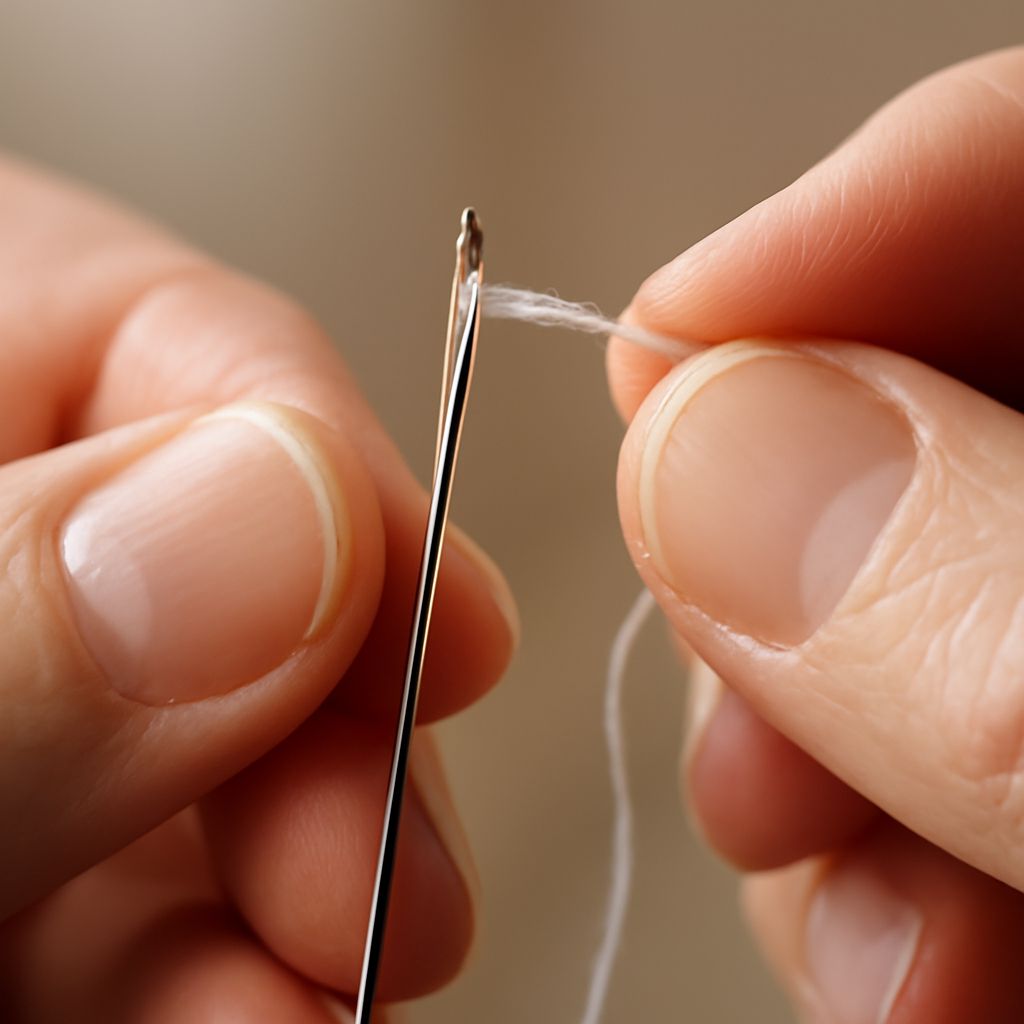
Thread size and needle size go hand in hand. If the needle is too small, the thread shreds; too large, and you’ll see holes and uneven tension. Industry guidance echoes this. As noted in Coats menswear thread guidance, “The final thread choice will be determined by the fabric weight, the construction of the load bearing seams and the stitch definition required,” and thread size determines needle size. Their lockstitch example pairs Tex 30–40 with a size 80–90 needle.
- Quick pairings: Tex 10–20 → 60/8–70/10 needles; Tex 25–40 → 80/12–90/14; Tex 50–80 → 90/14–110/18.
- Needle types: Microtex for crisp wovens and sheers; Universal for everyday; Ballpoint/Stretch for knits; Jeans for denim and canvas; Topstitch for heavy/decorative threads; Leather for hides and vinyl.
- Tension and stitch: Finer thread often needs slightly lower upper tension; heavier threads may need a drop in tension and a longer stitch to seat cleanly.
Keep a small range of sizes on hand and change needles as soon as stitches look fuzzy or skip. For a handy checklist of what belongs in your kit, see this essential sewing tools guide.
Choose thread by fabric weight, seam demands, and the finish you want, then match a compatible needle. Start with fine polyester for sheers, all‑purpose poly for midweights, and stronger core‑spun or bonded threads for heavy fabrics and stress zones. Pair sizes thoughtfully, adjust tension and stitch length, and always test on a scrap. That little bit of dialing‑in pays off with flatter seams, crisper topstitching, and garments that hold up beautifully in wear and wash.